

Sodium Dichloroisocyanurate SDIC Powder/Granular/Tablets
- Active chlorine: ≥55% There are two kinds of effective chlorine content of dichlorine in the market: 56% and 60%.
- Moisture content: ≤14
- Solubility (25οC): 25g/100g water
- PH value of 1% solution: 5.5-7.0
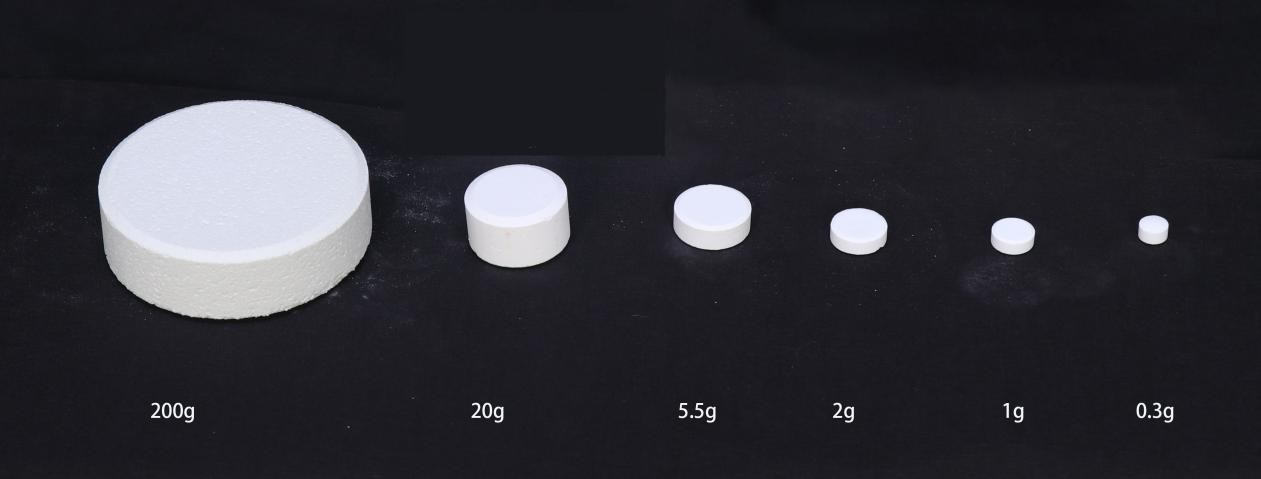
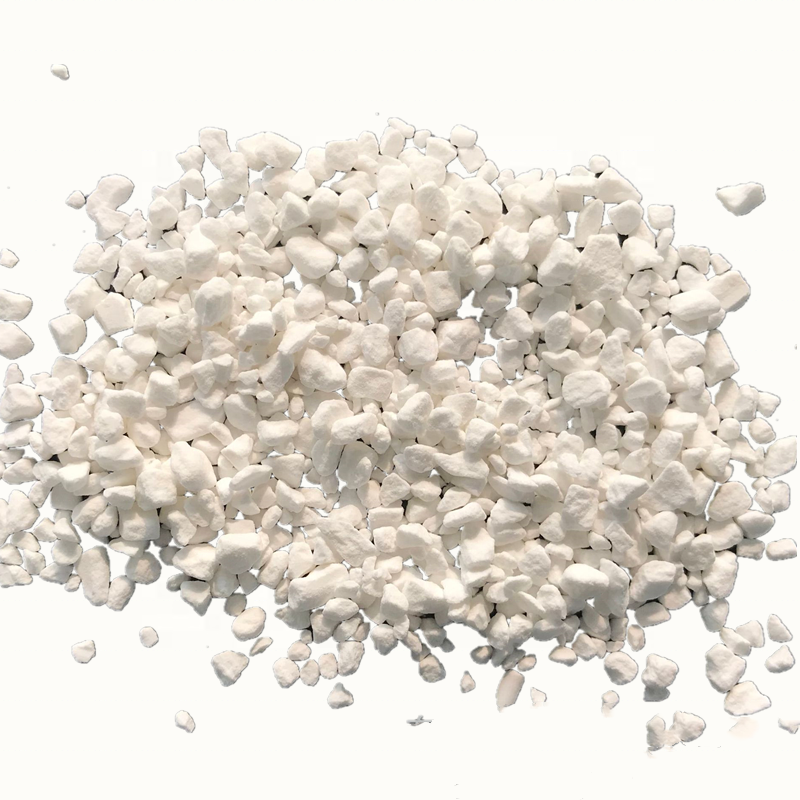
- Specifications: Powder, Granule (8-30mesh, 20-60mesh), Tablets (20g, 5g, 1g). Size of granular and tablets can be customized.
- CAS No: 2893-78-9
- MF: C3O3N3CL2Na
- HS Code: 2933692910
Excellent solubility, high purity, leaves minimal residue, highly effective in effervescent tablet form for quick disinfection.
Product Feature
Strong bactericidal and disinfectant ability, the effective chlorine content of high-quality products is more than 60%, with strong disinfectant and bactericidal effect, the bactericidal rate reaches 99% at 20ppm. It has strong killing effect on all kinds of bacteria, algae, fungi and germs.
- Its toxicity is very low, and it has been approved at home and abroad to use DCCNa in the process of disinfecting and killing food and drinking water.
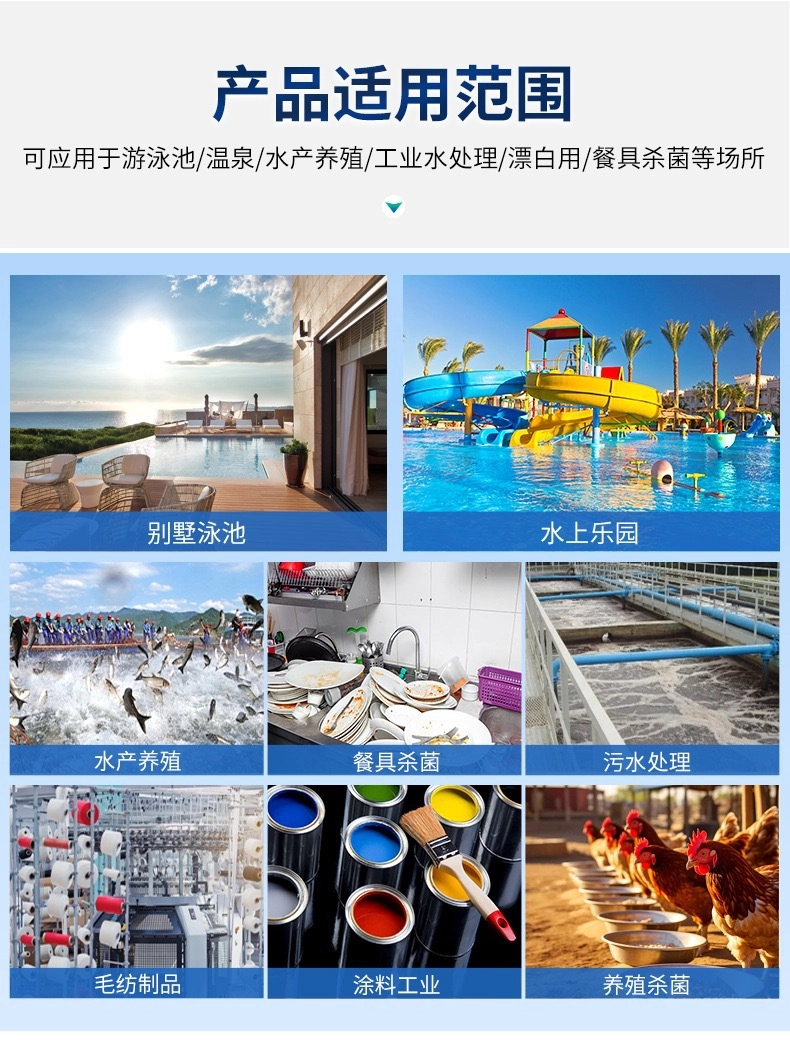
- Wide range of application, the product can not only be used in food and beverage processing industry and drinking water disinfection, cleaning and disinfection of public places, in the industrial circulating water treatment, civil household sanitation disinfection, disinfection of the breeding industry and other aspects of the wider use.
- High utilisation of effective chlorine, DCCNa has high solubility in water, every 100mL of water can dissolve 30g of DCCNa under 25°C. Even in the water solution where the water temperature is as low as 4°C, DCCNa can release all the effective chlorine contained in it quickly, so that its disinfecting and sterilising effect can be fully utilised. Other solid chlorine-containing products (except for chlorinated isocyanuric acid) have much lower chlorine value than DCCNa due to lower solubility or slow release of chlorine.
- Better stability, due to the higher stability of the triazine ring in the molecule of chlorinated isocyanuric acid products, so the nature of DCCNa is very stable. According to the test, the dry DCCNa stored in the warehouse, after 1 year, the loss of effective chlorine is less than 1%.
The product is solid and can be made into white powder or granule, which is convenient for packing and transporting, and also convenient for users to choose and use.
- Sodium dichloroisocyanurate is more stable than trichloroisocyanurate, releasing less chlorine gas during storage and transportation and emitting a milder odour.
Performance Parameters
Effective chlorine content, %≥ 60 56 |
PH,1%aqueous solution 5.5-7.0 5.5-7.0 |
Particle size Granule(8-30mesh;20-60mesh); Tablets(20g:5g;1g) |
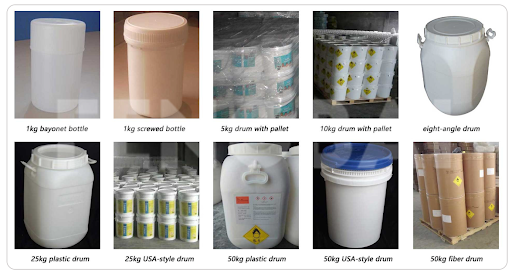
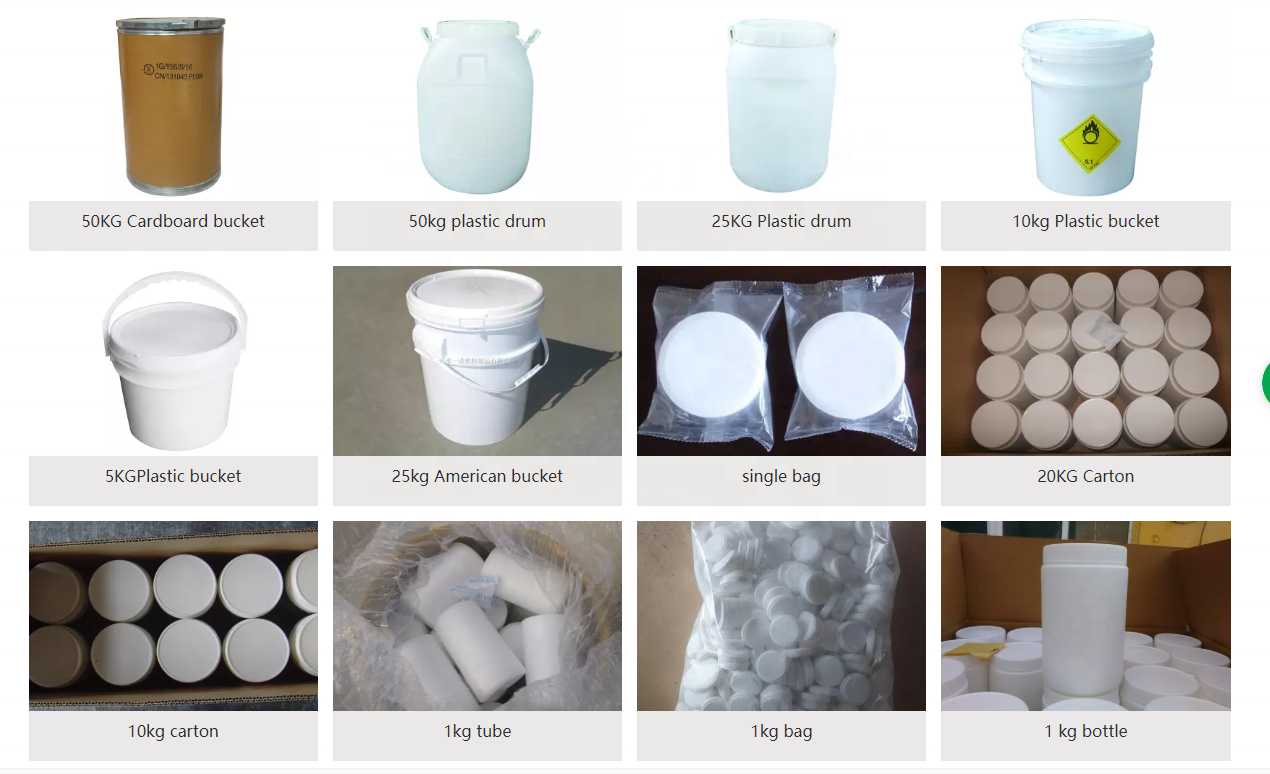
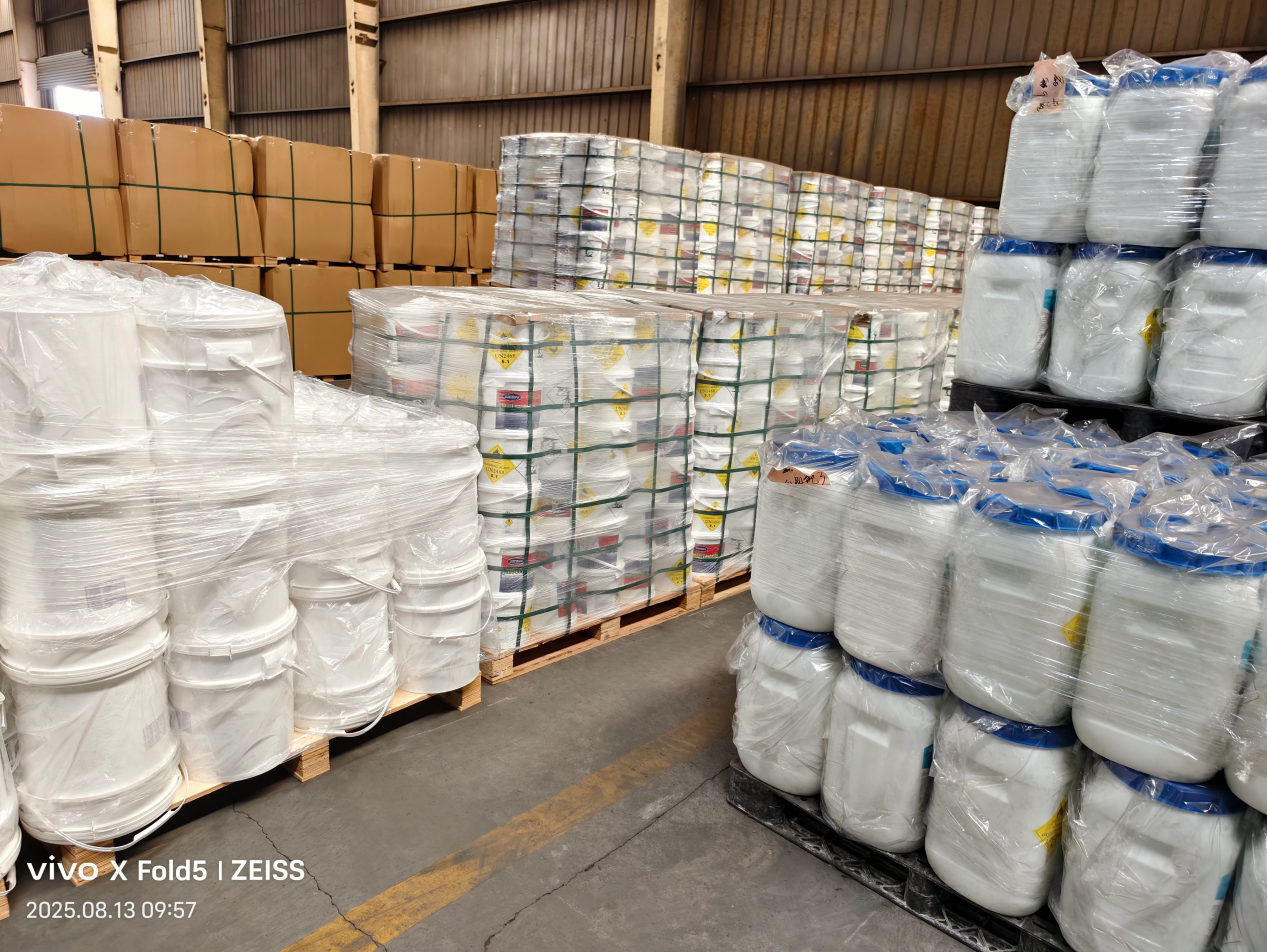
Packaging 25kg/pp bag;1000kg/pp bag;25kg/plastic drum;50kg/plastic drum;50kg/fibre drum. |
Product packaging:
Powder: pure white powder
granular: 5-8 mesh, 8-30 mesh, 30-100 mesh
tablet: 1g, 2g, 3.3g, 20g,200g
drum, bucket, barrel, container
5kg,10kg, 15kg, 25kg, 50kg/ drum
50kg/drum,21mt/20”containe
The Main Application:
Sodium dichloroisocyanurate SDIC is a broad-spectrum disinfectant, sterilizer, and algicidal deodorant. It has the advantages of strong sterilization, good stability, low toxicity, and no pollution. Troclosene sodium can quickly kill viruses, bacteria, and spores that can effectively prevent hepatitis and other infectious diseases. Widely used for drinking water disinfection, preventive disinfection, and environmental disinfection. SDIC chlorine also can be used for silkworm rearing disinfection, livestock, poultry, fish feeding disinfection. In industry, it can also be used for wool shrinkage control finishing, textile industry bleaching, industrial recycling water algae removal, rubber chlorination agent. FOCOUN SDIC is high efficiency, stable performance and no harmful effect on the human body.
Faqs
- Sewage treatment. It can be applied to sewage treatment because it has a wide range of application to PH value and short settling time. The application of poly aluminum chloride in water treatment can ensure the quality of water sources to a certain extent and reduce the harm to human health. At present, polyaluminum chloride water treatment is not only used in industrial sewage but also widely used in urban sewage and drinking water treatment.
- Poly aluminium chloride uses in paper industry.In addition to water treatment applications, poly-aluminium chloride can also be used in the recycled paper industry. It plays a major role in the paper industry as a filter, which can improve the purity of paper.
- Cosmetics industry. Polyaluminium chloride (PAC) can be used as an adhesive after hydrolysis. It is a synthetic water-soluble polymer. It is often used in the preparation of cosmetics emulsion. For its stable nature and little irritant to skin, it is often used as an emulsion stabilizer in the cosmetic industry.
- Other Industries : polyaluminium chloride PAC can also be used in precision casting, medicine, paper rubber, leather, petroleum, chemical, dye and other industries. In a word, poly-aluminium chloride is widely used in industry, and its application effect is very good
Poly aluminium chloride is not a single product, but a series of polymers, consisting of aluminium, oxygen, hydrogen and chlorine elements. Poly aluminum chloride is a new water purification material, inorganic polymer coagulant. It is a white or yellow water-soluble solid. We usually judge its strength and quality by the content of Al2O3 and alkalinity. In addition, because of its high electrical charge, it is more effective at destabilizing and removing suspended matter than other aluminum salts.
What is polyaluminium chloride?
Polyaluminum chloride (PAC) is not a single product but a series of polymers composed of the elements aluminum, oxygen, hydrogen, and chlorine. It is a novel water purification material and an inorganic polymer flocculant. It is a white or yellow, water-soluble solid. Its strength and quality are typically judged by its aluminum oxide (Al₂O₃) content and alkalinity. Furthermore, due to its high charge, it is more effective than other aluminum salts in removing suspended solids.
Dissolve the PAC powder in water at a ratio of 1:3 to liquid, then add 10-30 times of water to dilute it to the desired concentration before use.
The optimal PH value for dosing is 3.5-5.0. Selecting the optimal PH value for dosing can maximize the benefits of coagulation. The dosage can be determined according to the different turbidity of raw water. Before use, it is best to conduct a small test according to the water quality characteristics, select the best value, and then put it into use. When the turbidity of the raw water is high, the dosage is appropriately increased, and when the turbidity is low, the dosage can be appropriately reduced.
How to use polyaluminium chloride powder
Dissolve polyaluminium chloride powder in water at a ratio of 1:3 to make a liquid, then add 10 to 30 times the amount of water to dilute it to the required concentration before use.
The optimal pH value for dosing is between 3.5 and 5.0. Selecting the optimal pH value for dosing maximizes coagulation effectiveness. The dosage can be determined based on the turbidity of the raw water. Before use, it is best to conduct a pilot test based on the water quality to determine the optimal pH value. When the raw water turbidity is high, the dosage can be increased appropriately; when the turbidity is low, the dosage can be reduced appropriately.
They shall be sealed and stored in the dry and ventilated place to prevent from rain, high temperature and strong sunlight.How to store polyaluminium chloride powder
It should be sealed and stored in a dry and ventilated place, away from rain, high temperature and direct sunlight.
White PAC chemical, commonly refereed to as high-purity iron-free PAC or food grade PAC, is the highest quality compared to other types of polyaluminium chloride. The main raw materials are high-quality aluminum hydroxide powder and hydrochloric acid, and the production process used is the most advanced technology spray drying method. White polyaluminium chloride is used in papermaking sizing agent, sugar decolorizing, clarifying agent, tanning leather, medicine, cosmetics, precision casting, drinking water treatment and other fields.
Yellow PAC chemical are mainly used in sewage treatment and drinking water treatment. The raw materials are calcium aluminate powder, hydrochloric acid, bauxite. The production process adopted is the plate and frame filter press process or the spray drying process. For the treatment of drinking water, there are strict requirements in terms of heavy metals, so both raw materials and production processes are better than brown poly aluminium chloride.
Brown PAC chemical is generally mainly used for sewage treatment. The raw materials are calcium aluminate powder, hydrochloric acid, bauxite and iron powder and the production process adopts the drum drying method. Because of iron powder, the color is brown. The more iron powder is added, the darker the color. It is also known as polyaluminum ferric chloride, which has excellent results in sewage treatment.
What are the classifications of polyaluminium chloride?
White polyaluminium chloride (white PAC chemical), commonly referred to as high-purity iron-free PAC or food-grade PAC, is of the highest quality compared to other types of PAC. Its main raw materials are high-quality aluminum hydroxide powder and hydrochloric acid, produced using a state-of-the-art spray drying process. White PAC is used in paper sizing, sugar decolorizing, clarifying agents, leather tanning, pharmaceuticals, cosmetics, precision casting, and drinking water treatment.
Yellow polyaluminium chloride (PAC) chemicals are primarily used in sewage and drinking water treatment. Its raw materials are calcium aluminate powder, hydrochloric acid, and bauxite. The production process employed is either plate and frame filter pressing or spray drying. For drinking water treatment, which requires stricter heavy metal control, both the raw materials and production process are superior to brown PAC.
Brown polyaluminium chloride (PAC) chemicals are commonly used in wastewater treatment. Made from calcium aluminate powder, hydrochloric acid, bauxite, and iron powder, it is produced using a drum drying process. The addition of iron powder gives it a brown colour. The more iron powder added, the darker the colour. Also known as polyaluminium iron chloride, it offers excellent wastewater treatment results.
Classification by production process
Roller type polyaluminium chloride. The aluminum content is general, the water insoluble matter is high, and it is mostly used for sewage treatment.
Plate and frame polyaluminium chloride. With high aluminum content and low water insoluble matter, it is used for municipal sewage treatment and domestic sewage treatment.
Spray drying polyaluminium chloride. With the characteristics of high aluminum content, low water insoluble matter and fast dissolution rate, it is usually used for drinking water treatment and higher standard water treatment.
Classification by production process
Drum-type polyaluminium chloride. It has a moderate aluminium content and a high water-insoluble matter content and is mainly used for sewage treatment.
Plate and frame polyaluminium chloride. It has high aluminium content and low water-insoluble matter content, and is suitable for the treatment of urban and domestic sewage.
Spray-dried polyaluminium chloride. This product features high aluminium content, low levels of water-insoluble matter, and rapid dissolution. It is commonly used for drinking water treatment and high-standard water treatment.
There are many synthetic methods of polyaluminium chloride. According to different raw materials, They can be divided into metal aluminum method, active aluminum hydroxide method, alminum trioxide method, aluminum chloride method, alkali-dissolving method, etc.
Metal aluminum method. The raw materials for synthesizing polyaluminum chloride by the metal aluminum method are mainly the scraps of aluminum processing, such as aluminum scraps, aluminum ash and aluminum slag. The liquid polyaluminium chloride is prepared by slowly adding hydrochloric acid to the aluminum ash according to a certain proportion under stirring to carry out the reaction, and undergoing curing polymerization and sedimentation. Then diluted, filtered, concentrated and dried to get the PAC powder. In terms of technology, it can be divided into three types, acid method, alkali method and neutralization method.
The acid method mainly uses HCl, and the product quality is not easy to control.
The alkaline production process is difficult, the equipment investment is large, the amount of alkali used is large, the pH value control costs raw materials, and the cost is high.
The most commonly used method is neutralization. As long as the ratio is well controlled, the specified standards can generally be met.
Aluminum hydroxide method. The purity of aluminum hydroxide powder is relatively high, and the content of heavy metals in the synthesized poly aluminium chloride is low. Generally, the production process of heating and pressing acid-dissolving is used. This process is relatively simple, but the salinity of the produced polyaluminium chloride is relatively low. Therefore, two processes of heating and pressurizing acid dissolution with aluminum hydroxide and neutralization of calcium aluminate ore powder are generally used.
Alumina method. The raw materials containing aluminum oxide mainly include gibbsite, bauxite, kaolin, coal gangue, etc. The production process can be divided into two steps. The first step is to obtain crystalline aluminum chloride, and the second step is to obtain polyaluminum chloride by pyrolysis or neutralization.
Aluminum chloride method. The method using aluminum chloride powder as raw material to produce polyaluminium chloride powder is most commonly used. It can be prepared by boiling pyrolysis with crystalline aluminum chloride at 170℃, adding water for curing and polymerization,and then curing and drying to get PAC powder.
Alkali solution method. First, the aluminum ash is reacted with sodium hydroxide to obtain a sodium aluminate solution, and then the PH value is adjusted with hydrochloric acid to obtain a polyaluminum chloride solution. The polyaluminium chloride powder prepared by this method has good color appearance and less insoluble matter, but has high sodium chloride content, high raw material consumption, low solution alumina 聚合氯化铝是如何制取的?
There are many methods for synthesizing polyaluminium chloride. According to different raw materials, they can be divided into metallic aluminium method, activated aluminium hydroxide method, aluminium trioxide method, aluminium chloride method, alkali dissolution method, etc.
Aluminum Metal Method. The raw materials for synthesizing polyaluminum chloride (PAC) using the aluminum metal method are primarily waste materials from aluminum processing, such as aluminum chips, aluminum ash, and aluminum slag. Liquid PAC is prepared by slowly adding a certain proportion of hydrochloric acid to the aluminum ash and reacting under stirring. This reaction then undergoes solidification, polymerization, and precipitation. This is followed by dilution, filtration, concentration, and drying to produce PAC powder. Technically, this method can be categorized into three types: the acid method, the alkaline method, and the neutralization method.
The acid method mainly uses hydrochloric acid, and its product quality is difficult to control.
The production process of alkali is relatively complicated, the equipment investment is huge, and the amount of alkali used is also large. The control of pH value consumes a lot of raw materials and the cost is also high.
The most commonly used method is the neutralization method. As long as the proportion is properly controlled, the specified standards can usually be achieved.
Aluminum hydroxide method. Aluminum hydroxide powder has a relatively high purity, and the synthesized polyaluminum chloride has a low heavy metal content. The production process typically involves heating and pressing, followed by acid dissolution. This process is relatively simple, but the resulting polyaluminum chloride has a relatively low salinity. Therefore, heating and pressing aluminum hydroxide, followed by neutralization of calcium aluminate powder, are commonly used.
Alumina method. Alumina-containing raw materials primarily include diaspore, bauxite, kaolin, and coal gangue. The production process can be divided into two steps: the first step is to produce crystalline aluminum chloride, and the second step is to produce polyaluminum chloride through thermal decomposition or neutralization reaction.
The aluminum chloride method is the most common method for producing polyaluminum chloride powder using aluminum chloride powder as the raw material. This method involves boiling and decomposing crystalline aluminum chloride at 170°C, adding water to solidify and polymerize it, and then solidifying and drying it to obtain polyaluminum chloride powder.
Alkaline solution method. First, aluminum ash reacts with sodium hydroxide to produce a sodium aluminate solution. The pH is then adjusted with hydrochloric acid to produce a polyaluminum chloride solution. This method produces polyaluminum chloride powder with a good appearance and low insoluble matter. However, it also has high sodium chloride content, high raw material consumption, low alumina content, and high industrial production costs.
What Are Advantages of PAC Polyaluminium Chloride
Polyaluminium chloride (PAC) is a widely used water treatment chemical. It has a wide range of PH adaptation and it is not easy to produce color or other side effects. After the use of poly aluminum chloride, the content of iron, manganese and other heavy metals in water is low, which has a little corrosive effect on the equipment. For this reason, it plays a special role in the treatment of papermaking waste-water, printing and dyeing waste-water.
Poly aluminium chloride in water treatment has the characteristics of good coagulation performance, large alum particles, fast settling, low dosage, high efficiency, and wide application range. So it mainly used in treating urban drinking water and all kinds of industrial waste-water. This product can also be used to remove iron, manganese, chromium, lead and other heavy metals in water, fluoride, and oil in water, so it is used to treat printing and dyeing, papermaking, oilfield sewage, urban sewage, and sludge dehydration treatment process. Due to the positive charge of polyaluminum chloride, it has strong adsorption of suspended matter in water. For this reason, it has many advantages such as strong decontamination, high comprehensive efficiency in oil removal and turbidity removal, low cost, etc. It also can be used in casting, medicine, leather, and other fields.
Because of its good stability, the PAC dosing can be reduced under the same water quality. Especially in the case of poor water quality, the dosage of poly aluminum chloride can be reduced by half. It not only reduces the labor intensity of workers but also reduces the water production cost of users. In addition, PAC in water treatment can ensure safety, reduce water accidents, and provide safe and reliable drinking water for residents.
What are the advantages of polyaluminium chloride (PAC)
Polyaluminum chloride (PAC) is a widely used chemical in water treatment. It exhibits broad acid and alkali compatibility and is less prone to discoloration or other side effects. Using PAC reduces the levels of heavy metals such as iron and manganese in water, making it less corrosive to equipment. Therefore, it plays a special role in the treatment of wastewater from papermaking, printing, and dyeing industries.
In water treatment, polyaluminum chloride (PAC) boasts excellent coagulation properties, large aluminum particles, rapid precipitation, low dosage, high efficiency, and a wide range of applications. Therefore, it is primarily used to treat municipal drinking water and various industrial wastewaters. It can also remove heavy metals such as iron, manganese, chromium, and lead, fluorides, and oil from water, making it useful in treating printing and dyeing, papermaking, oilfield wastewater, municipal sewage, and sludge dewatering processes. Because PAC carries a positive charge, it strongly adsorbs suspended solids in water. Consequently, it offers numerous advantages, including strong purification capabilities, efficient oil and turbidity removal, and low cost. It is also used in foundry, pharmaceuticals, leather, and other fields.
Due to its excellent stability, the dosage of polyaluminium chloride can be reduced under the same water quality conditions. In particular, in cases of poor water quality, the dosage of polyaluminium chloride can be cut in half. This not only reduces the workload for workers but also lowers water costs for users. Furthermore, polyaluminium chloride ensures safety during the water treatment process, reduces water-related accidents, and provides residents with safe and reliable drinking water.
Get A Free Quote
- Please feel free to give your inquiry in the form below. Thanks.