

Polyacrylamide Crystals
- Appearance: White powder,
- Product Features: Crystalline granules, white
- Type: Flocculant, Clarifier, Thickener
- Usage: Water Treatment Chemicals
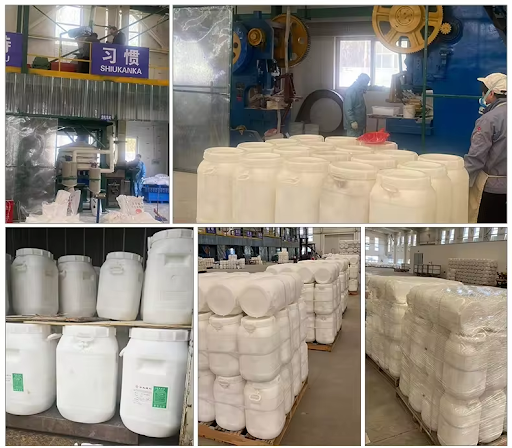
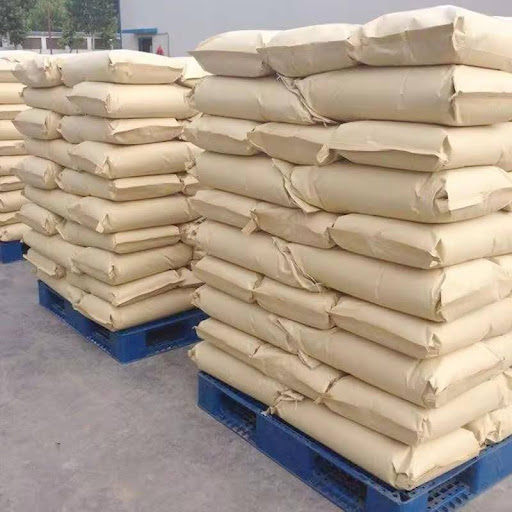
- Various packaging options available (bag/barrel)
- Non-toxic and harmless, ensuring safe usage
Product Feature
Our flocculant, cationic polyacrylamide, is meticulously designed for water treatment and the paper industry. As an efficient flocculant, clarifier, and thickener, it significantly improves water quality. This product accelerates the clarification process by promoting the aggregation and settling of suspended particles, thereby enhancing the efficiency of water treatment. Cationic polyacrylamide is particularly effective for treating industrial wastewater, municipal sewage, and pulp water, showcasing its exceptional capabilities in color removal, heavy metal removal, and organic matter elimination.
Manufactured in Shandong Province, China, this product is produced using advanced manufacturing technologies and a strict quality control system, ensuring each batch offers high stability and superior performance. Due to its efficacy and safety, our cationic polyacrylamide has been widely applied in numerous critical water treatment projects globally, earning trust and commendations from various enterprises.
Performance Parameter
Classification:
Non-ionic (NPAM): Contains only amide groups, no charge, suitable for neutral or weakly acidic environments.
Anionic (APAM): Contains carboxyl (—COO⁻) or sulfonic acid (—SO₃⁻), modified by hydrolysis or copolymerization, suitable for positively charged suspended solids.
Cationic (CPAM): Contains positively charged groups such as quaternary ammonium (—N⁺(CH₃)₃), often used for negatively charged sewage flocculation.
Amphoteric PAM: Contains both positive and negative charged groups, suitable for complex water quality.
Physical and chemical properties:
Solubility: easily soluble in water, the dissolution rate is affected by molecular weight, ion type and particle morphology. Viscous gel is formed at high concentration.
Viscosity: The viscosity of the aqueous solution is extremely high (positively correlated with the molecular weight), with significant thickening and rheological adjustment capabilities.
Stability: Strong acid and alkali resistance (pH 3~10), but high temperature (>100°C) or long-term shear force will cause molecular chain degradation.
Flocculation: Aggregate suspended particles through adsorption bridging and electrical neutralization mechanisms to form large flocs for sedimentation.
Main Application
Wastewater treatment:
Anionic PAM is used for solid-liquid separation of urban sewage and industrial wastewater (such as electroplating, printing and dyeing) to remove suspended matter and heavy metals.
Cationic PAM is used for sludge dehydration to reduce the sludge moisture content (from 98% to 60~80%).
Drinking water treatment: As a coagulant, it is used in combination with aluminum salts/iron salts to reduce the amount of coagulant and improve water quality.
Oil displacement agent:
By increasing the viscosity of the injected water (anionic PAM), the sweep efficiency is increased, and it is used in tertiary oil recovery (EOR) of oil fields to increase the recovery rate by 10~30%.
Drilling fluid additive: Control the rheology of drilling fluid and reduce friction resistance.
Papermaking and textiles:
Retention aids (cationic PAM) increase the retention rate of fillers and fibers and reduce white water pollution.
Reinforcement agents improve the tensile strength and burst resistance of paper.
Textiles:
Sizing agents enhance yarn wear resistance; flocculants for dyeing wastewater treatment.
Agriculture and environmental protection Soil improvement:
Improve soil aggregate structure, reduce soil erosion, and enhance water retention capacity (especially in arid areas).
Sand fixation and ecological restoration: Combined with plant fibers, used for desertification control.
Food industry: Sugar clarifier (non-ionic PAM).
Construction: Concrete thickener, reducing cement particle sedimentation.
Cosmetics: Emulsion stabilizer.
Faqs
- Sewage treatment. It can be applied to sewage treatment because it has a wide range of application to PH value and short settling time. The application of poly aluminum chloride in water treatment can ensure the quality of water sources to a certain extent and reduce the harm to human health. At present, polyaluminum chloride water treatment is not only used in industrial sewage but also widely used in urban sewage and drinking water treatment.
- Poly aluminium chloride uses in paper industry.In addition to water treatment applications, poly-aluminium chloride can also be used in the recycled paper industry. It plays a major role in the paper industry as a filter, which can improve the purity of paper.
- Cosmetics industry. Polyaluminium chloride (PAC) can be used as an adhesive after hydrolysis. It is a synthetic water-soluble polymer. It is often used in the preparation of cosmetics emulsion. For its stable nature and little irritant to skin, it is often used as an emulsion stabilizer in the cosmetic industry.
- Other Industries : polyaluminium chloride PAC can also be used in precision casting, medicine, paper rubber, leather, petroleum, chemical, dye and other industries. In a word, poly-aluminium chloride is widely used in industry, and its application effect is very good
Poly aluminium chloride is not a single product, but a series of polymers, consisting of aluminium, oxygen, hydrogen and chlorine elements. Poly aluminum chloride is a new water purification material, inorganic polymer coagulant. It is a white or yellow water-soluble solid. We usually judge its strength and quality by the content of Al2O3 and alkalinity. In addition, because of its high electrical charge, it is more effective at destabilizing and removing suspended matter than other aluminum salts.
What is polyaluminium chloride?
Polyaluminum chloride (PAC) is not a single product but a series of polymers composed of the elements aluminum, oxygen, hydrogen, and chlorine. It is a novel water purification material and an inorganic polymer flocculant. It is a white or yellow, water-soluble solid. Its strength and quality are typically judged by its aluminum oxide (Al₂O₃) content and alkalinity. Furthermore, due to its high charge, it is more effective than other aluminum salts in removing suspended solids.
Dissolve the PAC powder in water at a ratio of 1:3 to liquid, then add 10-30 times of water to dilute it to the desired concentration before use.
The optimal PH value for dosing is 3.5-5.0. Selecting the optimal PH value for dosing can maximize the benefits of coagulation. The dosage can be determined according to the different turbidity of raw water. Before use, it is best to conduct a small test according to the water quality characteristics, select the best value, and then put it into use. When the turbidity of the raw water is high, the dosage is appropriately increased, and when the turbidity is low, the dosage can be appropriately reduced.
How to use polyaluminium chloride powder
Dissolve polyaluminium chloride powder in water at a ratio of 1:3 to make a liquid, then add 10 to 30 times the amount of water to dilute it to the required concentration before use.
The optimal pH value for dosing is between 3.5 and 5.0. Selecting the optimal pH value for dosing maximizes coagulation effectiveness. The dosage can be determined based on the turbidity of the raw water. Before use, it is best to conduct a pilot test based on the water quality to determine the optimal pH value. When the raw water turbidity is high, the dosage can be increased appropriately; when the turbidity is low, the dosage can be reduced appropriately.
They shall be sealed and stored in the dry and ventilated place to prevent from rain, high temperature and strong sunlight.How to store polyaluminium chloride powder
It should be sealed and stored in a dry and ventilated place, away from rain, high temperature and direct sunlight.
White PAC chemical, commonly refereed to as high-purity iron-free PAC or food grade PAC, is the highest quality compared to other types of polyaluminium chloride. The main raw materials are high-quality aluminum hydroxide powder and hydrochloric acid, and the production process used is the most advanced technology spray drying method. White polyaluminium chloride is used in papermaking sizing agent, sugar decolorizing, clarifying agent, tanning leather, medicine, cosmetics, precision casting, drinking water treatment and other fields.
Yellow PAC chemical are mainly used in sewage treatment and drinking water treatment. The raw materials are calcium aluminate powder, hydrochloric acid, bauxite. The production process adopted is the plate and frame filter press process or the spray drying process. For the treatment of drinking water, there are strict requirements in terms of heavy metals, so both raw materials and production processes are better than brown poly aluminium chloride.
Brown PAC chemical is generally mainly used for sewage treatment. The raw materials are calcium aluminate powder, hydrochloric acid, bauxite and iron powder and the production process adopts the drum drying method. Because of iron powder, the color is brown. The more iron powder is added, the darker the color. It is also known as polyaluminum ferric chloride, which has excellent results in sewage treatment.
What are the classifications of polyaluminium chloride?
White polyaluminium chloride (white PAC chemical), commonly referred to as high-purity iron-free PAC or food-grade PAC, is of the highest quality compared to other types of PAC. Its main raw materials are high-quality aluminum hydroxide powder and hydrochloric acid, produced using a state-of-the-art spray drying process. White PAC is used in paper sizing, sugar decolorizing, clarifying agents, leather tanning, pharmaceuticals, cosmetics, precision casting, and drinking water treatment.
Yellow polyaluminium chloride (PAC) chemicals are primarily used in sewage and drinking water treatment. Its raw materials are calcium aluminate powder, hydrochloric acid, and bauxite. The production process employed is either plate and frame filter pressing or spray drying. For drinking water treatment, which requires stricter heavy metal control, both the raw materials and production process are superior to brown PAC.
Brown polyaluminium chloride (PAC) chemicals are commonly used in wastewater treatment. Made from calcium aluminate powder, hydrochloric acid, bauxite, and iron powder, it is produced using a drum drying process. The addition of iron powder gives it a brown colour. The more iron powder added, the darker the colour. Also known as polyaluminium iron chloride, it offers excellent wastewater treatment results.
Classification by production process
Roller type polyaluminium chloride. The aluminum content is general, the water insoluble matter is high, and it is mostly used for sewage treatment.
Plate and frame polyaluminium chloride. With high aluminum content and low water insoluble matter, it is used for municipal sewage treatment and domestic sewage treatment.
Spray drying polyaluminium chloride. With the characteristics of high aluminum content, low water insoluble matter and fast dissolution rate, it is usually used for drinking water treatment and higher standard water treatment.
Classification by production process
Drum-type polyaluminium chloride. It has a moderate aluminium content and a high water-insoluble matter content and is mainly used for sewage treatment.
Plate and frame polyaluminium chloride. It has high aluminium content and low water-insoluble matter content, and is suitable for the treatment of urban and domestic sewage.
Spray-dried polyaluminium chloride. This product features high aluminium content, low levels of water-insoluble matter, and rapid dissolution. It is commonly used for drinking water treatment and high-standard water treatment.
There are many synthetic methods of polyaluminium chloride. According to different raw materials, They can be divided into metal aluminum method, active aluminum hydroxide method, alminum trioxide method, aluminum chloride method, alkali-dissolving method, etc.
There are many synthetic methods of polyaluminium chloride. According to different raw materials, They can be divided into metal aluminum method, active aluminum hydroxide method, alminum trioxide method, aluminum chloride method, alkali-dissolving method, etc.
Metal aluminum method. The raw materials for synthesizing polyaluminum chloride by the metal aluminum method are mainly the scraps of aluminum processing, such as aluminum scraps, aluminum ash and aluminum slag. The liquid polyaluminium chloride is prepared by slowly adding hydrochloric acid to the aluminum ash according to a certain proportion under stirring to carry out the reaction, and undergoing curing polymerization and sedimentation. Then diluted, filtered, concentrated and dried to get the PAC powder. In terms of technology, it can be divided into three types, acid method, alkali method and neutralization method.
The acid method mainly uses HCl, and the product quality is not easy to control.
The alkaline production process is difficult, the equipment investment is large, the amount of alkali used is large, the pH value control costs raw materials, and the cost is high.
The most commonly used method is neutralization. As long as the ratio is well controlled, the specified standards can generally be met.
Aluminum hydroxide method. The purity of aluminum hydroxide powder is relatively high, and the content of heavy metals in the synthesized poly aluminium chloride is low. Generally, the production process of heating and pressing acid-dissolving is used. This process is relatively simple, but the salinity of the produced polyaluminium chloride is relatively low. Therefore, two processes of heating and pressurizing acid dissolution with aluminum hydroxide and neutralization of calcium aluminate ore powder are generally used.
Alumina method. The raw materials containing aluminum oxide mainly include gibbsite, bauxite, kaolin, coal gangue, etc. The production process can be divided into two steps. The first step is to obtain crystalline aluminum chloride, and the second step is to obtain polyaluminum chloride by pyrolysis or neutralization.
Aluminum chloride method. The method using aluminum chloride powder as raw material to produce polyaluminium chloride powder is most commonly used. It can be prepared by boiling pyrolysis with crystalline aluminum chloride at 170℃, adding water for curing and polymerization,and then curing and drying to get PAC powder.
Alkali solution method. First, the aluminum ash is reacted with sodium hydroxide to obtain a sodium aluminate solution, and then the PH value is adjusted with hydrochloric acid to obtain a polyaluminum chloride solution. The polyaluminium chloride powder prepared by this method has good color appearance and less insoluble matter, but has high sodium chloride content, high raw material consumption, low solution alumina 聚合氯化铝是如何制取的?
There are many methods for synthesizing polyaluminium chloride. According to different raw materials, they can be divided into metallic aluminium method, activated aluminium hydroxide method, aluminium trioxide method, aluminium chloride method, alkali dissolution method, etc.
Aluminum Metal Method. The raw materials for synthesizing polyaluminum chloride (PAC) using the aluminum metal method are primarily waste materials from aluminum processing, such as aluminum chips, aluminum ash, and aluminum slag. Liquid PAC is prepared by slowly adding a certain proportion of hydrochloric acid to the aluminum ash and reacting under stirring. This reaction then undergoes solidification, polymerization, and precipitation. This is followed by dilution, filtration, concentration, and drying to produce PAC powder. Technically, this method can be categorized into three types: the acid method, the alkaline method, and the neutralization method.
The acid method mainly uses hydrochloric acid, and its product quality is difficult to control.
The production process of alkali is relatively complicated, the equipment investment is huge, and the amount of alkali used is also large. The control of pH value consumes a lot of raw materials and the cost is also high.
The most commonly used method is the neutralization method. As long as the proportion is properly controlled, the specified standards can usually be achieved.
Aluminum hydroxide method. Aluminum hydroxide powder has a relatively high purity, and the synthesized polyaluminum chloride has a low heavy metal content. The production process typically involves heating and pressing, followed by acid dissolution. This process is relatively simple, but the resulting polyaluminum chloride has a relatively low salinity. Therefore, heating and pressing aluminum hydroxide, followed by neutralization of calcium aluminate powder, are commonly used.
Alumina method. Alumina-containing raw materials primarily include diaspore, bauxite, kaolin, and coal gangue. The production process can be divided into two steps: the first step is to produce crystalline aluminum chloride, and the second step is to produce polyaluminum chloride through thermal decomposition or neutralization reaction.
The aluminum chloride method is the most common method for producing polyaluminum chloride powder using aluminum chloride powder as the raw material. This method involves boiling and decomposing crystalline aluminum chloride at 170°C, adding water to solidify and polymerize it, and then solidifying and drying it to obtain polyaluminum chloride powder.
Alkaline solution method. First, aluminum ash reacts with sodium hydroxide to produce a sodium aluminate solution. The pH is then adjusted with hydrochloric acid to produce a polyaluminum chloride solution. This method produces polyaluminum chloride powder with a good appearance and low insoluble matter. However, it also has high sodium chloride content, high raw material consumption, low alumina content, and high industrial production costs.
What Are Advantages of PAC Polyaluminium Chloride
Polyaluminium chloride (PAC) is a widely used water treatment chemical. It has a wide range of PH adaptation and it is not easy to produce color or other side effects. After the use of poly aluminum chloride, the content of iron, manganese and other heavy metals in water is low, which has a little corrosive effect on the equipment. For this reason, it plays a special role in the treatment of papermaking waste-water, printing and dyeing waste-water.
Poly aluminium chloride in water treatment has the characteristics of good coagulation performance, large alum particles, fast settling, low dosage, high efficiency, and wide application range. So it mainly used in treating urban drinking water and all kinds of industrial waste-water. This product can also be used to remove iron, manganese, chromium, lead and other heavy metals in water, fluoride, and oil in water, so it is used to treat printing and dyeing, papermaking, oilfield sewage, urban sewage, and sludge dehydration treatment process. Due to the positive charge of polyaluminum chloride, it has strong adsorption of suspended matter in water. For this reason, it has many advantages such as strong decontamination, high comprehensive efficiency in oil removal and turbidity removal, low cost, etc. It also can be used in casting, medicine, leather, and other fields.
Because of its good stability, the PAC dosing can be reduced under the same water quality. Especially in the case of poor water quality, the dosage of poly aluminum chloride can be reduced by half. It not only reduces the labor intensity of workers but also reduces the water production cost of users. In addition, PAC in water treatment can ensure safety, reduce water accidents, and provide safe and reliable drinking water for residents.
What are the advantages of polyaluminium chloride (PAC)
Polyaluminum chloride (PAC) is a widely used chemical in water treatment. It exhibits broad acid and alkali compatibility and is less prone to discoloration or other side effects. Using PAC reduces the levels of heavy metals such as iron and manganese in water, making it less corrosive to equipment. Therefore, it plays a special role in the treatment of wastewater from papermaking, printing, and dyeing industries.
In water treatment, polyaluminum chloride (PAC) boasts excellent coagulation properties, large aluminum particles, rapid precipitation, low dosage, high efficiency, and a wide range of applications. Therefore, it is primarily used to treat municipal drinking water and various industrial wastewaters. It can also remove heavy metals such as iron, manganese, chromium, and lead, fluorides, and oil from water, making it useful in treating printing and dyeing, papermaking, oilfield wastewater, municipal sewage, and sludge dewatering processes. Because PAC carries a positive charge, it strongly adsorbs suspended solids in water. Consequently, it offers numerous advantages, including strong purification capabilities, efficient oil and turbidity removal, and low cost. It is also used in foundry, pharmaceuticals, leather, and other fields.
Due to its excellent stability, the dosage of polyaluminium chloride can be reduced under the same water quality conditions. In particular, in cases of poor water quality, the dosage of polyaluminium chloride can be cut in half. This not only reduces the workload for workers but also lowers water costs for users. Furthermore, polyaluminium chloride ensures safety during the water treatment process, reduces water-related accidents, and provides residents with safe and reliable drinking water.
Get A Free Quote
- Please feel free to give your inquiry in the form below. Thanks.