


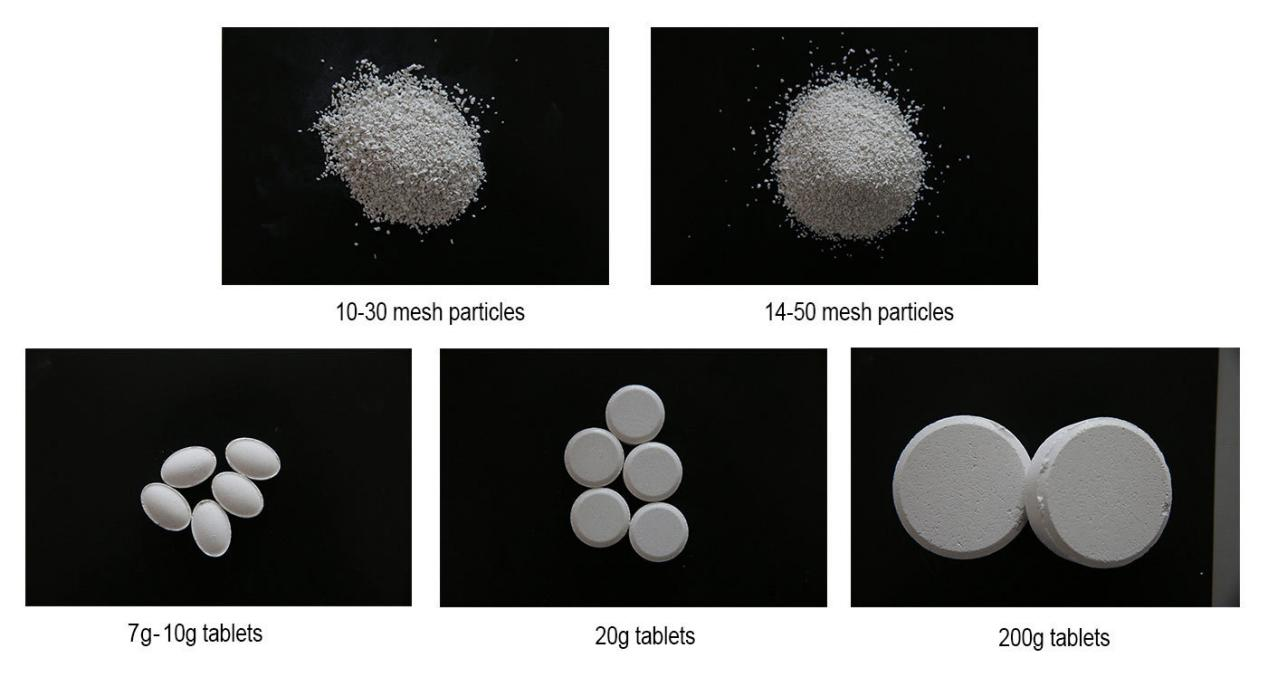


Calcium Hypochlorite (CHC) tablets/ granule
- Appearance: White granular or tablet
- Chlorine content %: ≥70
- Unsolvable matter %: ≤3.0
- CaCL2 : ≤9.0
- CAS No: 7778-54-3
- MF: Ca(ClO)2
- HS Code: 28281000
Product Feature
Calcium hypochlorite (CHC) is also known as chlorinated lime and bleaching powder. It is a white granular or tablet with a strong chlorine smell. When it is exposed to air, it absorbs water and carbon dioxide and breaks down to release hypochlorous acid and chlorine gas. Hypochlorous acid then decomposes to form hydrogen chloride and new oxygen. The oxidation of new oxygen is very strong, with the ability to destroy the pigment group, color fade, to achieve the bleaching effect. FOCOUN calcium hypochlorite granular has good disinfection and sterilization ability. It is an alkaline reaction after being dissolved in water. After been placed a long time, even if it does not encounter air and water, itself also can decompose and reduce its active component.
Calcium hypochlorite poses three hazards
1. Calcium hypochlorite exists in granular form. If combined with organic substances—including isocyanuric acid, dichlorine, and trichlorine—it may ignite or explode.
2. It must not be combined with laundry detergents, cleaning agents, or substances such as sugar and cola. This includes chlorine granules, chlorine disinfectant tablets, and chlorine disinfectants.
It must not be heated.
Calcium Method: Directly use calcium hydroxide and chlorine gas for reaction The process is simple, but the product purity is low.
Sodium Method: First use sodium hydroxide and chlorine to react and produce sodium hypochlorite, then react with lime. The craftsmanship is complex, but the product purity is very high.
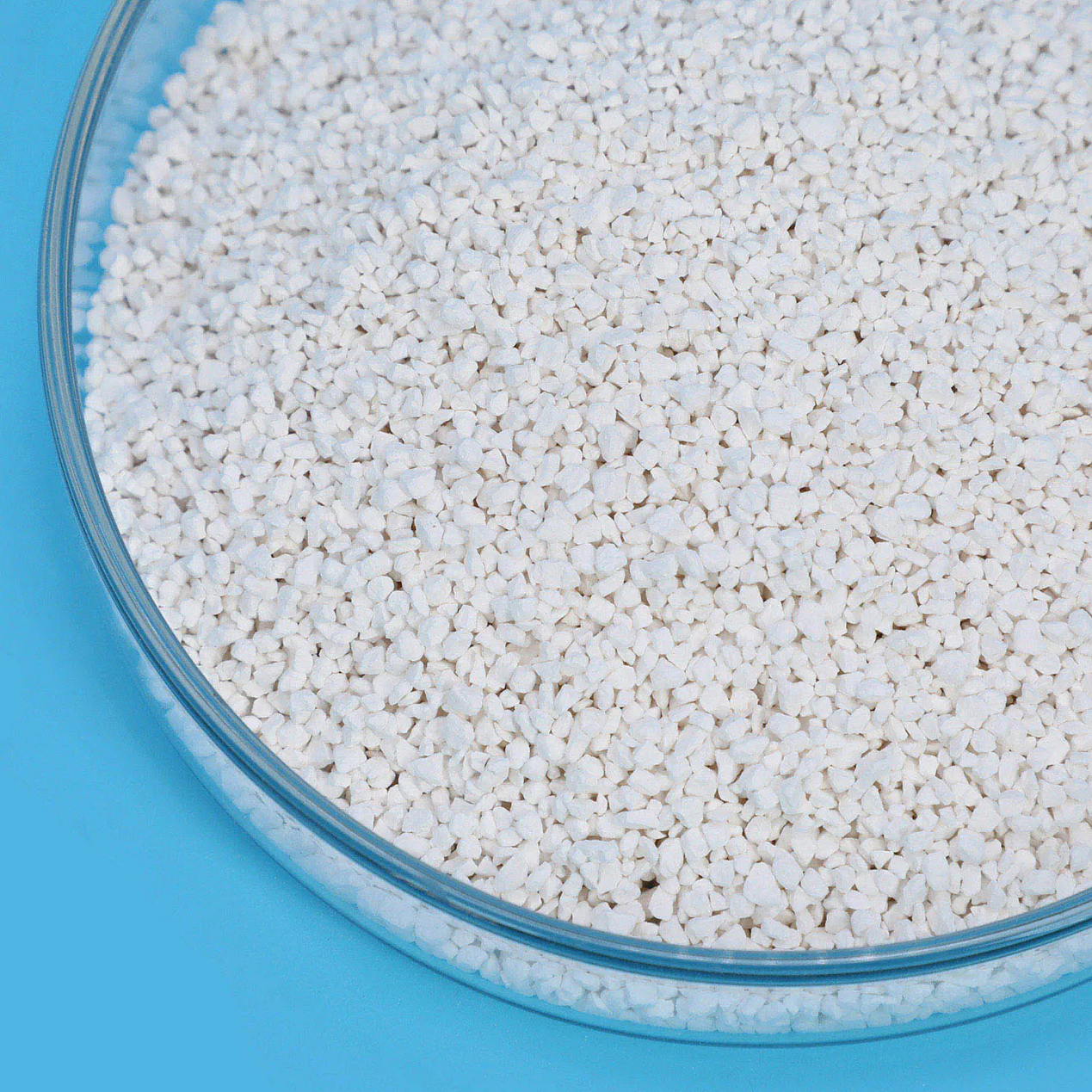
Performance Parameters
Item | Calcium Hypochlorite |
Color | White or Light grey |
Effective chlorine % | ≥70.0 |
Moisture% | 4-10 |
Insolubility | ≤3.0 |
CaCL2 | ≤9.0 |
Yearly loss of chlorine | ≤8.0 |
Granularity(14-50 mesh)% | ≥90.0 |
Product packaging:
Regular packing: 40kg/45kg/50kg plastic drum


The main Application:
Use:
1. For bleaching wooden paddles. Silk. Cloth. Fiber
2. Disinfection and sterilization and do.
3. Chemical agents, disinfectants of radioactive substances
4. Animal husbandry, animal husbandry;
Usage
FAQ's
Calcium Hypochlorite is a solid oxidizing disinfectant with calcium hypochlorite as the core active component, typically containing 90% available chlorine. It is a white or off-white granular or tablet-shaped substance, featuring strong bactericidal, virucidal, and algaecidal properties. It decomposes slowly in dry conditions, releasing chlorine to achieve disinfection, and is widely used in water treatment and public health fields.
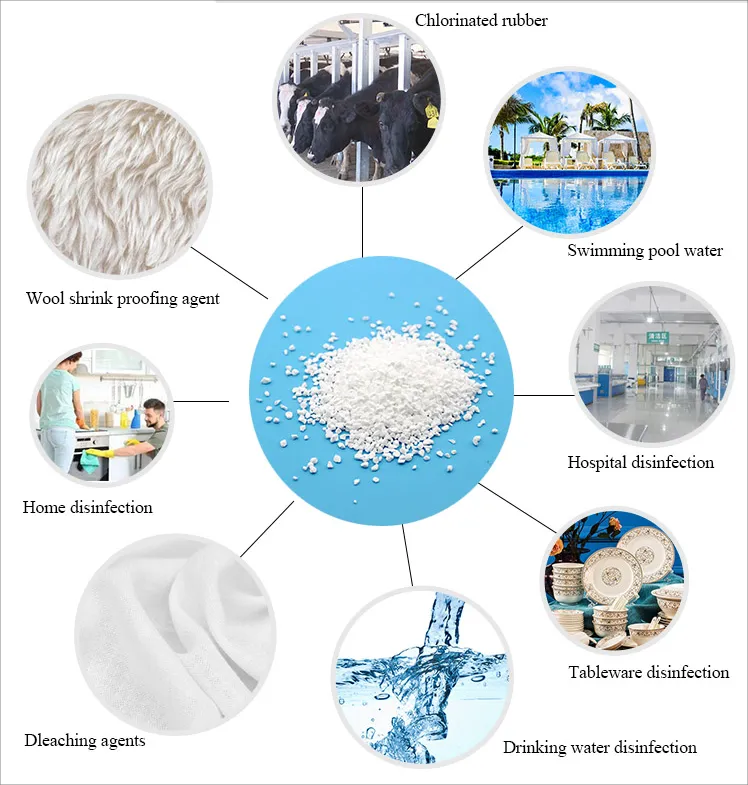
- Water disinfection: Used for tap water purification, swimming pool water treatment, industrial circulating water, and sewage disinfection. 2. Public health disinfection: Disinfects environments and surfaces in hospitals, schools, stations, and public toilets. 3. Aquaculture: Sterilizes fish ponds, shrimp ponds, and aquaculture water bodies to prevent disease outbreaks. 4. Food industry: Disinfects food processing workshops, equipment, and raw material storage areas. 5. Emergency epidemic prevention: Used for environmental and water disinfection in disaster-stricken areas and epidemic prevention sites.
- By physical form: Granular type (easy to dissolve, suitable for automatic feeding systems) and tablet type (precise dosage, convenient for manual operation). 2. By purity grade: Industrial-grade (for sewage treatment, industrial water) and food-grade (for drinking water, food processing, meeting safety standards). 3. By application scenario: Water treatment-specific, aquaculture-specific, and public health-specific.
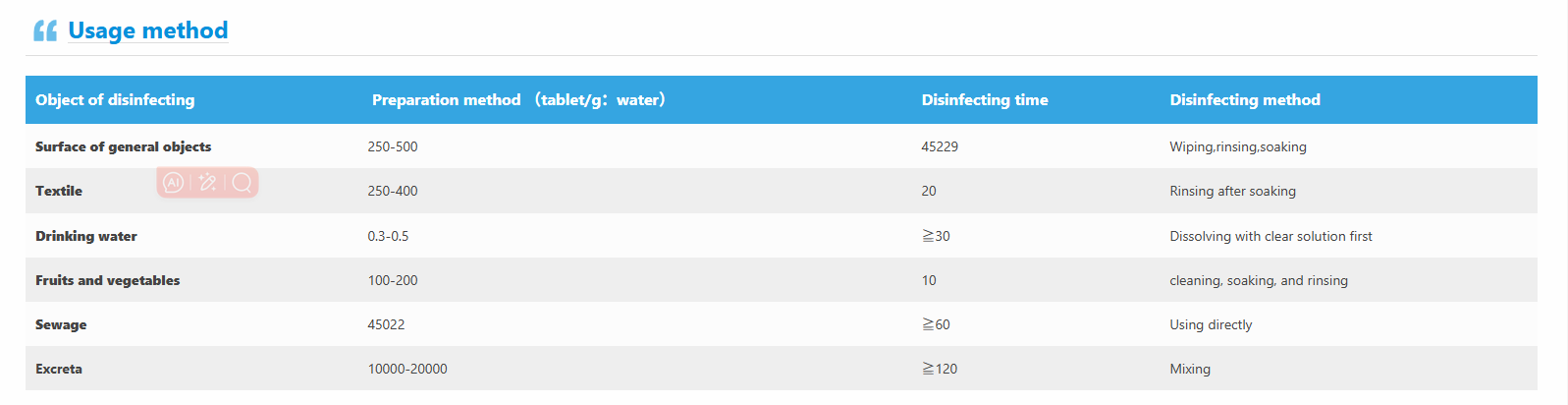
- Drinking water disinfection: Add 1g of Calcium Hypochlorite to 1000 liters of water, stir well, and let stand for 30 minutes (residual chlorine 0.2-0.5mg/L). 2. Swimming pool disinfection: Add 5-8g of Calcium Hypochlorite per 100 cubic meters of water, maintain residual chlorine at 0.5-1.0mg/L. 3. Surface disinfection: Dilute 10g of Calcium Hypochlorite with 10 liters of water, wipe or spray the surface, and air dry after 20 minutes. 4. Sewage treatment: Add 20-30g of Calcium Hypochlorite per 100 cubic meters of sewage, stir thoroughly, and react for 60 minutes.
- Store in a cool, dry, and well-ventilated warehouse with temperature ≤25℃, avoiding sunlight and moisture. 2. Keep the package sealed tightly to prevent moisture absorption and decomposition, which reduces available chlorine. 3. Store separately from acids, ammonia, organic substances, and flammables to avoid dangerous reactions. 4. Keep away from children and pets, and do not store with food or beverages.
- Raw material reaction: React calcium hydroxide with chlorine gas under controlled conditions to generate calcium hypochlorite. 2. Purification treatment: Remove impurities through filtration, crystallization, and drying to improve purity and available chlorine content. 3. Forming process: For tablets, mix purified calcium hypochlorite with stabilizers and binders, then press into tablets; for granules, granulate and dry the mixture. 4. Quality inspection: Test available chlorine content, stability, and solubility, then package after passing inspection.
- Personal protection: Wear gloves, goggles, and a mask during operation. Avoid direct contact with skin and eyes; rinse with plenty of water for 15 minutes if contact occurs. 2. Prohibit mixing: Do not mix with acids, ammonia, or organic compounds, as toxic chlorine gas may be produced. 3. Safe storage: Store in a locked place out of reach of children and pets; do not store in residential areas. 4. Waste disposal: Dissolve unused products in water, dilute, and discharge in accordance with environmental regulations; do not incinerate or discard directly. 5. Emergency handling: In case of fire, use dry powder fire extinguishers; do not use water.
Get A Free Quote
- Please feel free to give your inquiry in the form below. Thanks.