
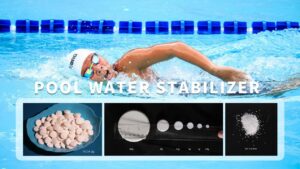
Can trichloroisocyanuric acid be used alongside sodium hypochlorite?

Can trichloroisocyanuric acid be used alongside sodium hypochlorite? Many customers employ salt chlorinators to enhance disinfection efficacy, while simultaneously seeking to utilise trichloroisocyanuric acid for sterilisation. Unfortunately, numerous contractors, motivated solely by profit, endorse this approach. These two substances must not be combined, as doing so poses significant hazards. This transcends mere project quality concerns. What chemical reaction occurs when sodium hypochlorite and trichloroisocyanuric acid mix upon contact with water? Initially, heat is generated. At a certain threshold, combustion may occur, potentially culminating in an explosion. Therefore, for chlorine-based disinfection, either sodium hypochlorite or trichloroisocyanuric acid must be used exclusively. The two substances must never be combined. To enhance disinfection efficacy, consider pairing trichloroisocyanuric acid with ozone – this approach is entirely safe.
Read More »

What is the function of cyanuric acid?

What is the function of cyanuric acid? For water treatment, particularly swimming pool water treatment, if you are unaware of this, you must read to the end. What is cyanuric acid? Cyanuric acid is a white crystalline powder that can be used as an additive in food or cosmetics; it is inherently harmless. China dominates the global cyanuric acid market, accounting for approximately 76% of its share. Cyanuric acid serves as a stable chlorine disinfectant, enabling the production of chlorinated compounds such as trichloroisocyanuric acid. It facilitates the storage and transportation of chlorine, establishing itself as the most prevalent disinfectant in swimming pools. First employed for pool disinfection in 1958, In swimming pool environments, cyanuric acid is safe and non-toxic. However, due to its inherent properties, cyanuric acid is highly stable and resistant to decomposition. It readily accumulates in pools, causing chlorine to become bound and unable to perform its

Read More »

Advantages and disadvantages of trichloroisocyanuric acid

Advantages and disadvantages of trichloroisocyanuric acid   Trichloroisocyanuric acid is the choice for most swimming facilities. The primary advantages and disadvantages are as follows: Firstly, trichlor is a slow-release disinfectant with 90% available chlorine content, available in forms such as 200g tablets, disinfectant granules, and disinfectant powder. Its notable advantage lies in its high available chlorine content, enabling effective and rapid elimination of various bacteria, fungi, spores, moulds, and other microorganisms. Concurrently, this high available chlorine content allows for cost savings in dosage. Disadvantages: 1. Slow dissolution. The dissolution of trichlorine with 90% available chlorine is relatively slow. During periods of high pool usage, it may not keep pace with the consumption of residual chlorine. 1. Acidic effect: Use may lower the pH of pool water. 2. Contains cyanuric acid, which readily accumulates in water. At elevated concentrations, it severely inhibits hypochlorous acid’s disinfection efficacy and poses health risks. Secondly,

Read More »

Applications of Trichloroisocyanuric Acid in Various Scenarios

Applications of Trichloroisocyanuric Acid in Various Scenarios Trichloroisocyanuric acid is a highly effective disinfectant and biocide. Below are its usage methods in specific scenarios: 1. Swimming Pool Disinfection Directly dispense trichloroisocyanuric acid tablets or granules evenly into the pool. Typically, 3-5 grams per cubic metre is administered. An automatic dosing system may be installed to regulate the dosage based on the pool’s water volume and quality, thereby maintaining disinfection efficacy. Precautions: Avoid dosing whilst swimmers are in the pool to prevent skin irritation. Thoroughly agitate the water after dosing to ensure even distribution of the disinfectant.   2. Drinking Water Disinfection Pre-chlorination treatment: Prior to raw water entering treatment facilities, add an appropriate quantity of trichloroisocyanuric acid for pre-chlorination. This removes algae, organic matter, and certain microorganisms. The typical dosage is 1-3 milligrams per cubic metre of water. Disinfection treatment: At the final stage of water treatment, trichloroisocyanuric acid is

Read More »